

Does Matcha Have Caffeine? How Much Is in a Cup
Yes. Matcha is made from tea leaves, and tea leaves naturally contain caffeine. Because you drink the whole ground leaf, a cup of matcha usually has more caffeine than a cup of steeped green tea, and less than a cup of coffee.
How much caffeine is in matcha?
Harvard Health gives these ranges for an 8-ounce cup:
- Green tea: 23 to 49 mg
- Matcha: 38 to 89 mg
- Coffee: 100 to 120 mg
These are ranges because no two cups are made the same way.
What changes the number
- How much powder you use. This matters most. A level teaspoon is about 2 g. A heaped one can be double that, and so is the caffeine. See How Much Matcha Powder to Use.
- The tea itself. Caffeine varies with the plant, the harvest and how long the leaves were shaded.
- What you add. Milk and ice do not add caffeine. A latte made with one teaspoon has the same caffeine as a bowl made with one teaspoon.
Is matcha caffeine free?
No. Real matcha always contains caffeine. If you are avoiding caffeine completely, matcha is not the right drink.
How much is too much?
Health Canada recommends a maximum of 400 mg of caffeine a day for adults, and 300 mg a day for people who are pregnant, breastfeeding or planning to become pregnant. That total counts everything: coffee, tea, cola, chocolate and energy drinks as well as matcha.
If caffeine keeps you awake, have your matcha earlier in the day. If you are pregnant, take medication or have a health condition, check with a healthcare professional.
Why some people say matcha feels different
Matcha also contains L-theanine, an amino acid found in tea. Researchers have studied caffeine and L-theanine together, and many people say matcha feels steadier to them than coffee. That part is personal, so pay attention to how you feel and adjust the amount.
For a side-by-side look, read Matcha vs Coffee.
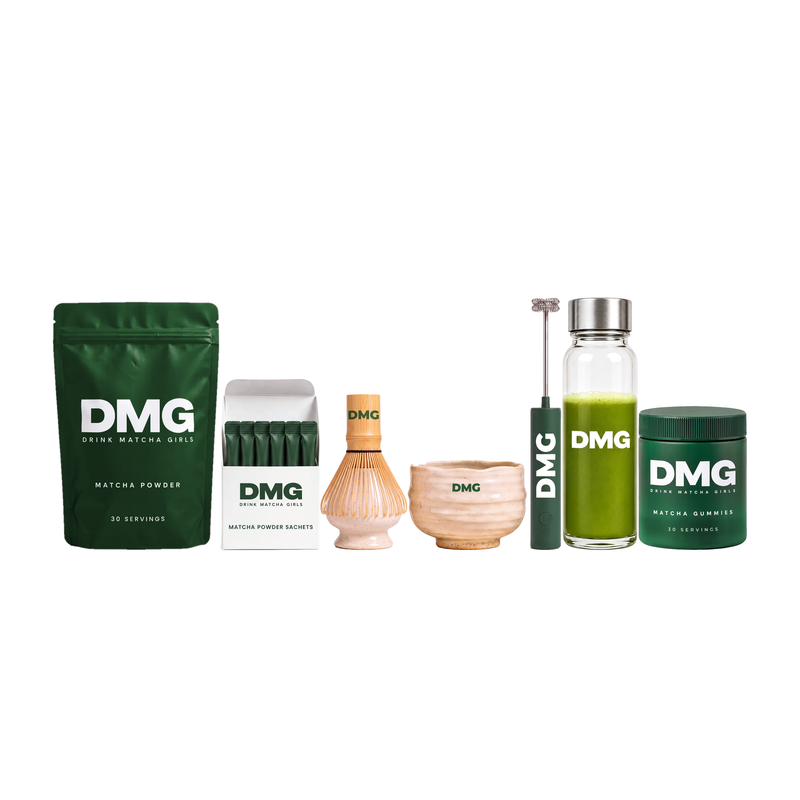
Everything in one box.
Powder, sachets, gummies, a bamboo whisk and a DMG bottle.